
Article
Who is God
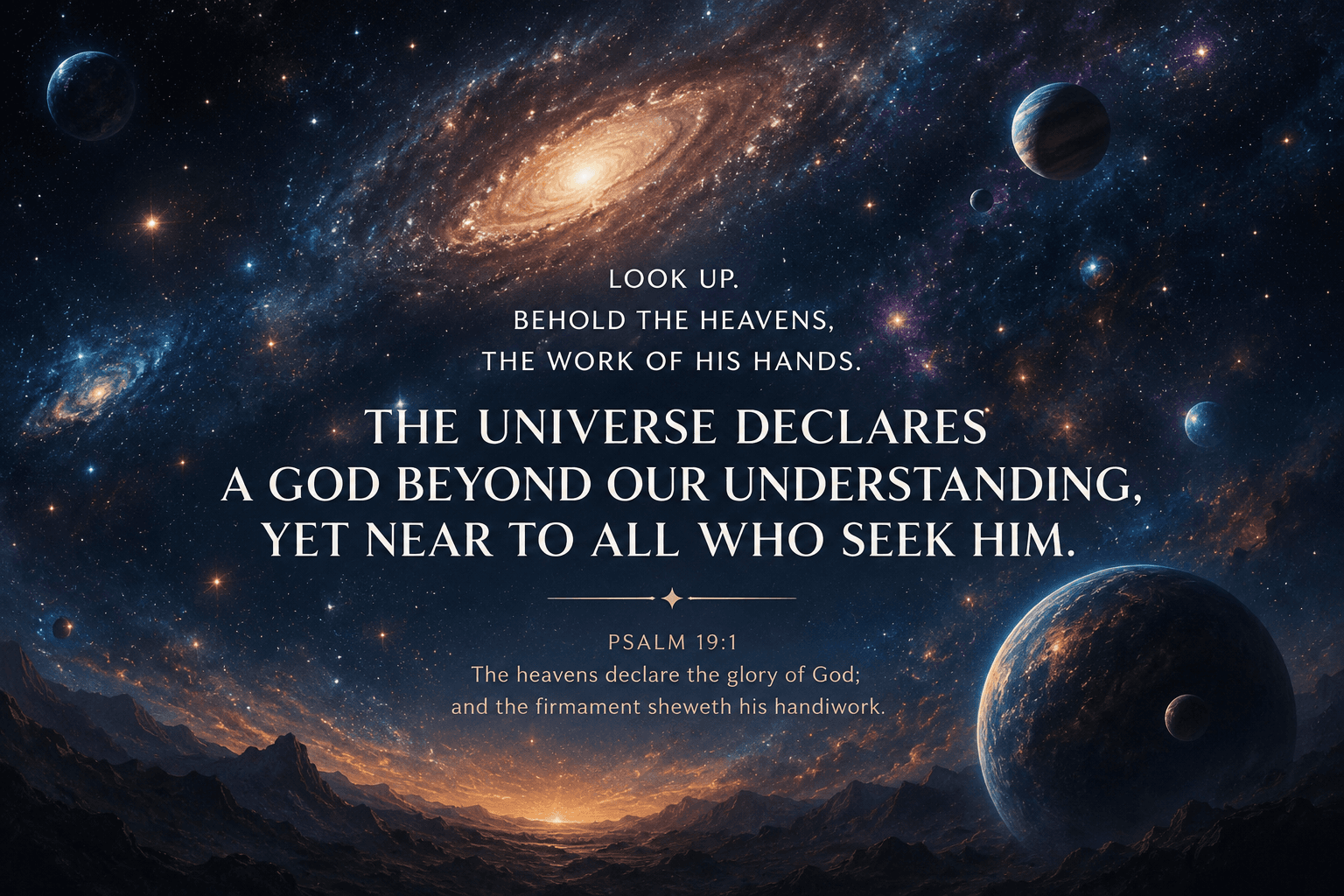
In these days, it is increasingly common to see people searching for a boxed explanation of God. Many want to define Him, measure Him, test Him, or reduce Him to something that can fit comfortably within human understanding. But God cannot be boxed.
So, who is God?
From years of studying Scripture, reflecting on the nature of God, and growing in relationship with Him, I have come to understand God as the supreme, first, absolute, unexplainable, and unprovable Cause.
Each of those descriptions carries a weight of its own.
God is supreme because nothing is above Him. He is first because He is not dependent upon something that came before Him. He is absolute because His existence does not depend upon anything outside Himself. He is unexplainable because the finite human mind cannot contain the fullness of the infinite God. And He is unprovable in the sense that God cannot be subjected to the kind of laboratory testing by which we establish ordinary physical objects.
And there is no shame in admitting that.
Human beings naturally want explanations. We want to understand the things around us because understanding often gives us the ability to predict, measure, manipulate, and control them. We want to place things within categories that our minds can handle.
But God cannot be contained in that way.
We cannot place God inside a laboratory as though He were an object waiting to be examined. We cannot reduce Him to a formula, a theory, or a definition and then claim that we have fully understood Him. The moment we think we have completely explained God, we have probably created something smaller than God.
This is part of what makes Him God.
There are things about God that we can know, and there are things about God that remain beyond the limits of our understanding. Scripture reveals God to us, but revelation does not mean that God becomes completely comprehensible to the human mind.
This is why faith is not the opposite of thinking. Rather, faith begins where human certainty reaches its proper boundary.
Science can investigate the universe, its laws, its structure, and its processes. Philosophy can ask questions about existence, causation, necessity, morality, consciousness, and meaning. Theology can examine what God has revealed about Himself. But none of these can place God inside a container and say, We now fully understand Him.
There comes a point where we must recognize the limits of human knowledge.
God does not call us to predict everything He will do. He calls us to trust Him.
He does not require us to possess an exhaustive explanation of His nature before we can believe in Him. He calls us to believe, to trust, and to know Him as He has chosen to reveal Himself.
There is much about God that we may never completely understand. Our understanding is finite, while God is not. Our minds are limited, while God is not. Therefore, expecting the human mind to carry the entire weight of explaining God's existence and nature is itself an unreasonable expectation.
God is not searching for people who can completely explain Him.
He is calling people who will know Him, trust Him, believe Him, and walk with Him.
After sitting closely with Scripture and reflecting on these questions over the years, I have come to this conviction:
God is the supreme, first, absolute, unexplainable, and unprovable Cause.
And that is not a weakness in the Christian understanding of God.
It is part of the mystery of who He is.
In the articles that follow, I will begin to unpack each of these descriptions more carefully, examining what it means for God to be supreme, first, absolute, unexplainable, and unprovable, and why these realities matter for our understanding of Him.
The more we examine the nature of God, the more we may discover that knowing God does not mean reducing Him to something small enough for us to contain.
It means recognizing that He is greater than the limits of the mind that seeks to understand Him.